Our Scan Coverage & Reports
Comprehensive Whole-body MRI. Specialist Reporting. Clarity without Compromise.
Your Whole Body MRI™ examination provides comprehensive imaging across multiple organs and body systems, with findings interpreted by a specialist radiologist experienced in whole body MRI and multi-organ imaging.
Following your scan, a detailed Radiologist Report documents significant findings and recommendations for appropriate follow-up in accordance with ONCO-RADS recommendations, providing a clear record for review with your referring doctor or healthcare provider.
What Does Our Scan Detect?
The findings below reflect conditions assessed by whole body MRI and are not exhaustive. Our broader screening packages incorporate complementary imaging modalities where appropriate, extending assessment beyond MRI alone.
Detection Sensitivity
How Sensitive is Whole Body MRI™ to Cancer?
The sensitivity of medical imaging varies by organ, disease type, lesion size and imaging technique, such as image resolution or inclusion of high-quality diffusion-imaging. Our imaging resolution and image quality exceed industry standards and minimum ONCO-RADS acquisition recommendations.
Our approximate lesion detection capabilities include:
- Brain, approximately 2 mm
- Lungs, MRI limited to > 9mm*, approximately 3 mm with added Spectral CT chest
- Body & organs – approximately 4 mm or greater (organ-dependent)*
Depending on each individuals preferences and health circumstances (e.g. family history), additional targeted imaging may be preferred and added to your whole-body scan.
*Detection sensitivity varies according to factors including disease type, size, stage, location, tissue contrast and the imaging technique used. For certain organs, including the breast, prostate, thyroid, salivary glands, testes and eyes, dedicated targeted imaging may be recommended for more detailed evaluation or greater diagnostic sensitivity than whole body MRI alone. All whole-body MRI scans have limited sensitivity for early bowel cancers and does not replace dedicated bowel screening. Colonoscopy remains the preferred examination for detecting colorectal cancer and precancerous polyps.
Conditions of the Brain, Head & Neck
Our whole-body MRI included in the Advanced and Executive packages can detect the following:
- Cancers of the head & neck:
- Brain cancers, including meningiomas, glioblastomas
- Orbital (eye) cancers, including ocular melanoma*
- Throat cancers, including upper oesophageal cancers
- Mouth cancers
- Thyroid tumours*
- Salivary gland tumours*
- Characterisation of suspicious lesions, including differentiation of malignant tumours from benign conditions such as cysts, haematomas and haemangiomas.
- Brain aneurysms
- Small vessel ischemia (a risk factor for stroke)
- Evidence of a previous stroke (also called cerebrovascular accident, CVA)
- Multiple sclerosis and other demyelinating diseases
- Chiari malformation and other significant structural brain abnormalities
- Features of altered intracranial pressure
- Sinus disease
- Anatomical variations
*Small, early-stage thyroid, salivary gland and orbital cancers may be below the resolution of whole body MRI and are best assessed with dedicated targeted imaging.
Quantitative Brain Health Assessment
Our Whole Body MRI™ brain assessment included in the Advanced and Executive scan packages goes beyond conventional MRI by incorporating advanced quantitative brain imaging.
- 20+ brain structures volumes, including the hippocampus, grey matter and white matter, and compares selected brain volumes with age-matched normative data.
- quantitative measurements of brain tissue characteristics
Rather than relying on appearance alone, quantitative brain MRI provides objective measurements of your brain that can:
- Establish a personalised numerical baseline of brain structure and volume
- Compare selected brain volumes with expected values for your age
- Measure hippocampal volume, a known biomarker for cognitive health.
- Identify unexpected patterns of brain volume loss
- Track measurable changes in brain volume over time
- Provide additional information when assessing brain ageing and neurological or neurodegenerative conditions
If you return for future screening, these measurements can be compared over time, helping your radiologist identify subtle changes that may be difficult to appreciate from visual assessment alone.
Note: Quantitative brain MRI does not diagnose conditions such as dementia or Alzheimer’s disease in isolation.
Conditions of the Chest, Lungs & Heart
Our Whole Body MRI™ protocol includes advanced imaging techniques for assessment of the chest, complemented by dedicated low-dose Spectral CT imaging where greater sensitivity is required.
Whole Body MRI™ can identify a range of significant abnormalities, including:
- Solid organ cancers of the chest* including:
- Lung lesions (better visualised on Low Dose CT Chest)
- Breast lesions (better visualised on MRI Breast with Contrast)
- Oesophageal cancer
- Characterisation of suspicious lesions, including differentiation of malignant tumours from benign conditions such as cysts, haematomas and haemangiomas.
- Enlarged heart (cardiomegaly)
- Pericardial effusion
- Thoracic aortic aneurysm
- Sarcoma
- Other significant abnormalities within the scanned area
*Whole Body MRI™ is not the preferred modality to evaluate the cardiac health, or lungs and breasts in fine detail and dedicated imaging is recommended. Our Whole Body MRI™ includes low dose CT Chest and CT Coronary Calcium score for evaluation of lung and cardiovascular health.
Conditions of the Abdominal & Pelvic Organs
Our Whole Body MRI™ provides detailed anatomical, diffusion and quantitative imaging of the abdomen and pelvis and can detect conditions such as:
- Solid organ cancer of the abdomen and pelvis including*
- Pancreas
- Liver
- Stomach*
- Kidney
- Adrenal
- Uterine
- Bladder*
- Characterisation of suspicious lesions, including differentiation of malignant tumours from benign conditions such as cysts, haematomas and haemangiomas.
- Quantification of liver fat for detection of fatty liver disease
- Quantification of liver iron for detection of haemochromatosis
- Gallstones
- Bladder stones
- Obstructing kidney stones
- Spleen volume
- Ovarian cysts or tumours
- Endometriosis > 4mm
- Uterine anatomical variations
- Mullerian duct anomaly
- Uterine fibroids
- Pelvic free fluid
- Hernia
- Abdominal aortic aneurysm
- Displacing bowel mass
- Enlarged prostate
*Whole Body MRI™ is focused on detecting cancers in their earliest stage. While Whole Body MRI™ can detect cancers in all abdominal and pelvic organs, the early detection of some cancers are better detected by targeted imaging or tests, such as dedicated MRI or colonoscopy for prostate or colon cancer, respectively. Ability to detect small cancers in the bladder and stomach are dependent on fill volume.
Conditions of the Skeleton, Spine & Spinal Cord
Our Whole Body MRI™ provides detailed imaging of the skeleton, bone marrow, spine and spinal cord and can detect conditions such as:
- Multiple myeloma and other significant bone marrow abnormalities
- Bone and soft tissue sarcoma
- Spinal cord tumours
- Differentiation between benign and cancerous lesions (e.g. cyst versus malignant)
- Spinal disc herniation
- Spinal disc annular fissure
- Spinal disc degeneration
- Spinal cord abnormalities including compression and stenosis
Conditions of the Extremities
Our whole body scan includes coverage of the extremities, including hips, knees, and ankles* and detect a range of abnormalities including:
- Bone and soft tissue tumours or masses
- Suspicious bone marrow lesions
- Metastatic bone disease
- Bone marrow abnormalities
- Significant muscle and soft tissue abnormalities
- Knee and hip joint effusions
- Knee and hip osteoarthritis
- Knee and hip cartilage abnormalities
- Significant tendon and ligament abnormalities where visible
- Cysts and other soft tissue lesions
- Inflammatory or oedematous changes
- Vascular abnormalities such as clots, or deep vein thrombosis (DVT)
- Other significant incidental abnormalities within the scanned area
*Depending on body size and positioning, portions of the arms or feet may fall outside the MRI field of view and may not be fully assessed. Whole body MRI is a screening examination and does not replace dedicated MRI of a specific joint or extremity where clinically indicated.
Integrated Targeted Organ Imaging
Our Advanced Package can be customised with additional targeted imaging of specific organs or areas of interest, providing a more detailed assessment beyond our whole body MRI and allowing your screening to be tailored to your individual health priorities.
Our most comprehensive Executive Package further extends the coverage of the Advanced Whole Body MRI package with dedicated MRI imaging of the breast, prostate and rectum. Additional ultrasound imaging of the thyroid, salivary glands, carotid arteries, abdominal organs, and female pelvic organs and testes is also included.
This enables additional high-sensitivity coverage in the additional domains:
- Breast Health, including breast cancer detection. Breast MRI’s are reported by a subspecialist breast radiologist.
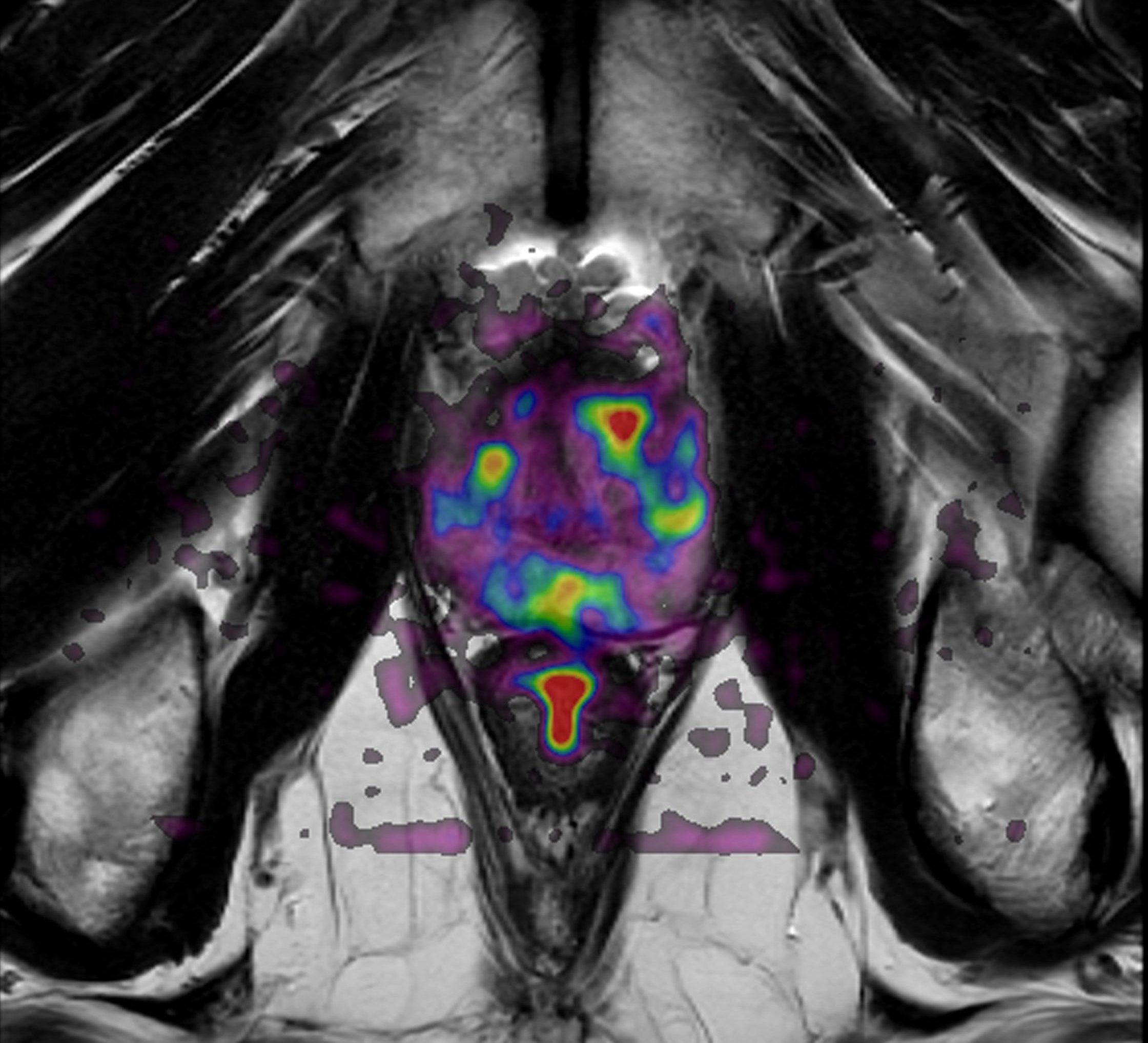
- Prostate Health, including detailed assessment and detection of prostate cancer.
- Endocrine Health, including assessment of the thyroid and salivary glands and detection of suspicious lesions and cancers.
- Cardiovascular Health, including carotid artery blood flow, plaque and stenosis assessment. Additional same-day add on of CT coronary angiography (CTCA) is available, with clinical indication and doctors referral.
- Pelvic Health, including dedicated assessment female pelvis for identification of abnormalities, including cancer.
- Testicular Health, including assessment of the testes and surrounding structures for cancer and other significant abnormalities.
- Rectal Health, including dedicated MRI assessment of the rectum and surrounding pelvic structures.
This integrated approach provides the reporting radiologist with additional diagnostic information at the time of interpretation, helping improve confidence, clarify indeterminate findings and potentially reduce the need for subsequent imaging.
The result is a more complete assessment from the outset and provides greater clarity, reducing any uncertainty associated with potentially avoidable follow-up tests.
All multi-modality imaging is performed onsite at MBR Health prior to or just after your whole body scan.
Additional Information
Whole Body MRI™ is not limited to a predefined list or number of conditions. Claims based on the number of conditions screened for can be misleading without considering the anatomical coverage, imaging protocol, resolution and sensitivity of the examination.
A condition can only be meaningfully assessed when the relevant anatomy is adequately imaged using an appropriate technique. For this reason, we focus on the quality and comprehensiveness of the imaging performed rather than simply quoting a large number of conditions.
It is not practical to list every abnormality that may be detected on our Whole Body MRI™. If you have a specific area of concern due to your personal, family or occupational history, please contact us before booking to discuss our imaging capabilities and whether additional targeted imaging may be appropriate.
Beyond MRI
Spectral CT Lung & Cardiovascular Assessment
We also include CT coronary artery calcium scoring to assess calcified plaque within the coronary arteries. This provides an established measure of cardiovascular risk and can help guide personalised prevention, further assessment and, where appropriate, treatment.
Together, these targeted CT examinations extend assessment beyond MRI alone, providing additional evaluation of lung and cardiovascular health for more actionable health insights.

Specialist Radiologist Reporting
At Whole Body MRI™, we follow structured reporting protocols, endorsed by the Royal Australian and New Zealand College of Radiologists (RANZCR), ensuring consistency and thoroughness in every report. This template-driven approach is especially crucial in whole-body MRI, allowing for better comparability of results across scans.
For cancer screening, we also adopt the international ONCO-RADS guidelines, a five-category classification system designed to systematically collect, communicate, and manage abnormalities. This standardised reporting ensures the highest level of detail and accuracy, providing you with confidence and clarity in your health assessment.

Timeliness & Delivery
Your Whole Body MRI™ report is typically completed within approximately 7 days by our experienced Radiologist. Given the comprehensive nature of the examination, additional specialist review or consultation may occasionally be undertaken before your report is finalised.
Once complete, your Whole Body MRI™ Report is provided to your referring doctor (e-delivery) and made available through MBR Health's secure patient portal.
We recommend reviewing your results with your doctor, who can discuss any findings and coordinate further investigation or follow-up where required.
Findings & Follow-Up
If your examination identifies a finding requiring further assessment, your report will provide clear recommendations for appropriate follow-up, which may include targeted imaging, specialist consultation or additional investigations.
Findings categorised as ONCO-RADS 3 or higher require follow-up with your healthcare team for further assessment.
Where appropriate, our team can assist in coordinating additional imaging or specialist review, providing a clear pathway from detection to diagnosis.